⚠️ Unstable film quality, excessive waste, and rising energy consumption can seriously reduce production efficiency; a multi-layer co-extrusion blown film production line provides a smarter and more stable solution.
A multi-layer co-extrusion blown film production line is an advanced co-extrusion system that combines multiple resin layers into one integrated film structure, helping manufacturers improve barrier performance, strength, thickness control, material utilization, and production flexibility in packaging, agricultural, and industrial applications.
➡️ Its real advantage lies in turning complex production demands into measurable manufacturing benefits.
1. Why a Multi-Layer Co-Extrusion Blown Film Production Line Is So Important
For modern film manufacturers, product requirements are becoming increasingly demanding. Customers want packaging films to provide strength, heat sealing performance, puncture resistance, transparency, printability, and cost efficiency — all within the same structure. Single-layer systems often struggle to meet all of these requirements at the same time. In contrast, a multi-layer co-extrusion blown film production line can better satisfy these needs by assigning different functions to different layers, allowing each resin material to perform in the most suitable position.
✅ This layered design gives production companies much greater flexibility in film development.
For example:
- One layer can be used to improve toughness
- One layer can be used to enhance heat sealing performance
- One layer can be used to optimize surface treatment performance
- One layer can be used to strengthen barrier performance
As a result, manufacturers can reduce the use of high-cost raw materials while still meeting strict technical requirements. For companies serving the packaging, agricultural, and industrial sectors, this flexibility helps build stronger market competitiveness.
2. Core Technical Advantages
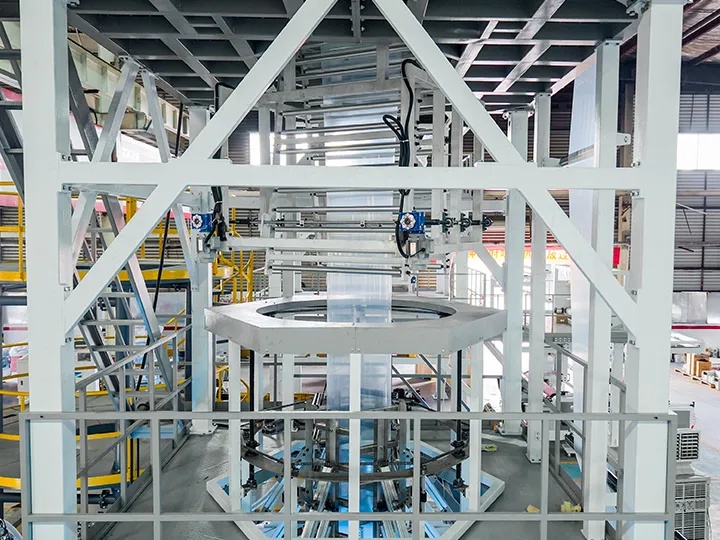
A multi-layer co-extrusion blown film production line is not simply about adding several extruders. Its value comes from the precise coordination of the entire production system, including:
- Screw design
- Die head structure
- Temperature control
- Haul-off system
- Winding system
- Automation control
High-precision engineering helps maintain balanced melt flow and achieve more uniform film thickness. Thickness consistency is critical, because even small fluctuations can cause problems during downstream processing, such as poor printing, unstable bag making, increased material waste, and inconsistent finished product quality.
✳️ Optimized Structure
Advanced die head design can support different raw material formulations and production targets. This means film manufacturers can develop customized film structures for different market demands instead of relying on a single general-purpose solution.
At the same time, strict dimensional precision in the die head and flow channels helps ensure:
- More uniform melt distribution
- More stable bubble formation
- Better film uniformity
- Higher final product quality
✳️ Robust and Durable Structural Design
Durability is another major advantage. High-strength alloy steel and precision machining improve wear resistance and long-term stability of key components. In real factory environments, equipment often needs to run continuously for long periods, so greater durability means:
- Less maintenance demand
- Longer service life
- Less downtime
- Lower total cost of ownership
For B2B manufacturing companies, these factors directly affect profitability and production reliability.
3. Efficiency, Stability, and Process Control
🚀 Efficiency is one of the main reasons manufacturers choose a multi-layer co-extrusion blown film production line.
Stable plasticizing performance, reliable electrical control systems, and well-designed screw configurations all contribute to smooth and continuous operation. When the system runs more stably, manufacturers can achieve:
- More consistent output
- Less material waste
- Higher-quality film rolls
- Better production efficiency
In addition, haul-off and winding performance are just as important as extrusion quality. Even if the melt processing itself is stable, poor bubble control or unstable winding can still lead to wrinkles, thickness variation, and roll defects.
✅ Higher overall line stability means better results
A properly configured multi-layer co-extrusion blown film production line can improve stability throughout the entire process, from extrusion to final winding. This brings clear production benefits:
- Lower reject rates
- Improved roll appearance
- Better downstream processing performance
- Higher customer satisfaction
For factories involved in downstream bag making, printing, or lamination, stable roll quality is especially important because it reduces interruptions and losses in later processing stages.
4. Material Savings and Energy Efficiency
💡 In today’s manufacturing environment, both material efficiency and energy efficiency are critical concerns.
A multi-layer structure allows high-cost raw materials to be used only where they are truly needed, instead of across the entire film thickness. This creates very practical cost advantages. For example, more expensive functional materials can be applied to specific layers to meet heat sealing, barrier, or surface performance requirements, while more economical materials can be used in the middle layers.
This structure helps manufacturers achieve:
- Lower raw material costs
- Higher material utilization
- Less waste generation
- Better sustainability performance
At the same time, energy-saving control systems help reduce power consumption and support cleaner production goals. For manufacturers facing rising electricity costs and increasing environmental pressure, these savings offer significant long-term value.
5. Flexibility for Different Market Applications
🌍 One of the greatest strengths of a multi-layer co-extrusion blown film production line is its adaptability.
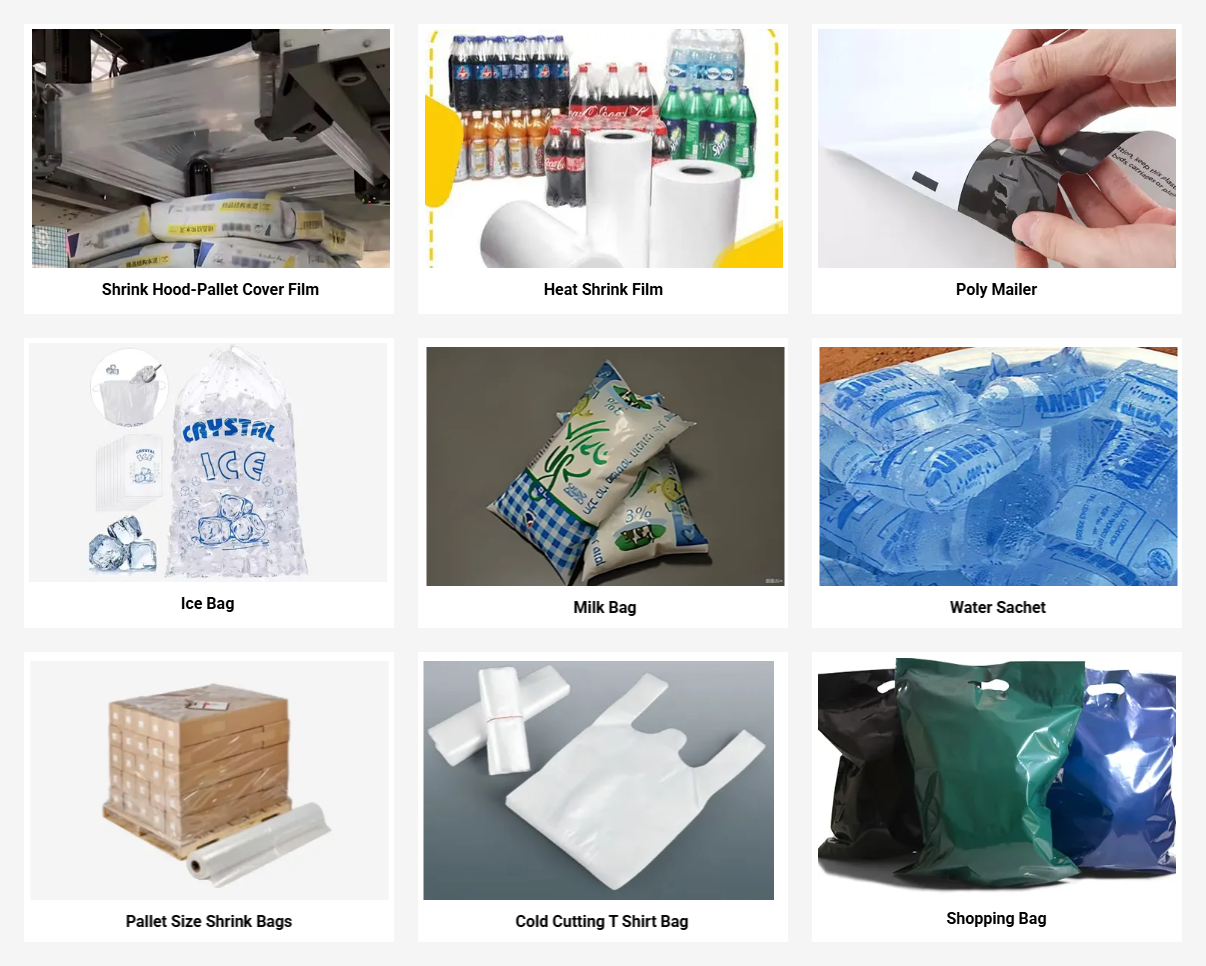
Different markets require different film properties. For example:
- Packaging films usually require good heat sealing performance and printability
- Agricultural films require stronger toughness and weather resistance
- Industrial films focus more on durability and processing stability
A multi-layer co-extrusion blown film production line makes it much easier to adjust film structures according to these demands. Whether the system is configured with fewer layers or a more advanced multi-layer combination, this production platform can be flexibly adapted to different product goals and customer requirements.
This flexibility is especially valuable for manufacturers serving multiple industries, because they need equipment that does more than satisfy a single application — they need a production platform that can support long-term business growth.
6. Long-Term Value for Manufacturers
From an investment perspective, a multi-layer co-extrusion blown film production line is not just an equipment upgrade, but a strategic improvement.
It helps manufacturers achieve:
- Higher product quality
- More stable production processes
- Lower waste and operating costs
- Greater flexibility in film structure design
- Stronger competitiveness in demanding markets
For B2B buyers, these advantages are highly important, because equipment purchasing decisions depend not only on output, but also on long-term reliability, service life, and overall return on investment.
✅ A multi-layer co-extrusion blown film production line helps manufacturers achieve higher quality, higher efficiency, greater flexibility, and stronger long-term competitiveness in film production.